October 15th 2026
What 30+ Years in TMS Have Taught Us About Clinical Practice
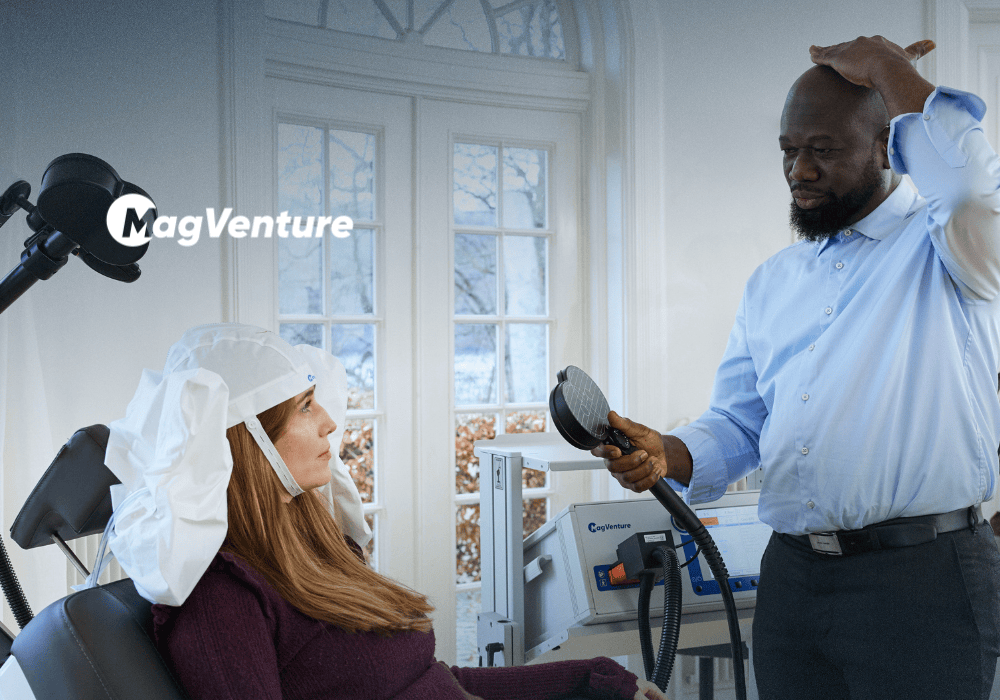
MagVenture has worked with transcranial magnetic stimulation (TMS) for more than 30 years. During that time, TMS has developed from technology used mainly in research to a treatment used in clinical practice in many parts of the world.
Technology has changed, research has grown, and more healthcare professionals have gained experience with TMS. At the same time, there is more to introducing TMS than the treatment itself. A TMS service also needs to work within the clinical setting where treatment is provided.
As the TMS service develops, other practical aspects need to be considered. These include planning a full course of treatment, organizing the patient pathway, sharing knowledge within the team and making sure that the service has the capacity needed to treat patients.
After more than 30 years in the field, these are some of the practical areas that MagVenture has seen become important when TMS is used in everyday clinical practice.
Planning a course of TMS treatment
TMS is usually delivered as a course of repeated treatment sessions. Planning therefore needs to take the full course of treatment into account, rather than focusing only on each individual appointment.
Patients may return for treatment many times over a period of time, depending on the treatment protocol. This means that staff, treatment rooms and appointment times need to be available throughout the course.
Small issues can also have a bigger effect when they happen more than once. A scheduling problem may affect several appointments for the same patient. Changes in staff availability may mean that another member of the team needs to take over. Time needed before or after a treatment session can also become important when several patients are being treated during the same day.
It is therefore useful to look at the full patient pathway. This may include referral, assessment, treatment planning, treatment sessions and follow-up. Different members of the team may be involved at different stages, so it is important that responsibilities are clear.
Planning the full treatment course can help make sure that the different parts of the patient pathway work together.
Organizing the TMS service
There is no single way to organize a TMS service. The setup will depend on where treatment is provided and on the resources available.
TMS may be provided in a hospital, an outpatient department, a university clinic or a private practice. In some settings, a small team may be responsible for most parts of the patient pathway. In others, several healthcare professionals may be involved.
Healthcare systems also differ between countries. Referral pathways, funding and reimbursement can affect how patients access treatment and how the service is organized.
For this reason, a setup that works well in one clinical setting may not work in exactly the same way in another. The clinical requirements of TMS remain the same, but the way the service is organized needs to fit the local setting.
It is also important to have clear responsibilities within the team. Staff should know who is responsible for the different parts of the patient pathway, how information is shared and what happens when the usual member of staff is not available.
These questions may be easy to manage when only a few people are involved. As the service grows, clear roles and ways of working can become more important.
Sharing knowledge within the team
When a TMS service is first set up, much of the practical knowledge may be held by a small number of people.
The staff members involved from the beginning often know how appointments are organized, how the equipment is prepared, where information can be found and who to contact when something changes.
As more people become involved, it is important that this knowledge is shared across the team. The day to day running of the service should not depend too much on one or two people.
This does not mean that there needs to be a written procedure for every situation. However, important information should be easy to find, and responsibilities should be clear.
This becomes especially relevant when new staff members join the team, when responsibilities change or when a member of staff is away.
Training also remains important after a TMS service has been established. New staff may need training, while existing staff may need to update their knowledge as equipment, protocols or ways of working change.
Looking at the capacity of the service
As more patients are treated, it may become necessary to look at whether the TMS service has enough capacity.
A full schedule does not always mean that more equipment is needed. Capacity can be affected by several things, including staff availability, treatment rooms, appointment times and the processes around treatment.
For example, the equipment and treatment room may be available, but there may not be enough staff at certain times of the day. There may also be gaps between appointments that are difficult to use. In other cases, steps before treatment begins may affect how quickly new patients can start.
Patient demand may also vary during the day or week. Some appointment times may be very busy while others are less used.
It is therefore important to understand what is limiting the service before making changes. In some cases, changes to scheduling or the way work is organized may help. In other cases, more staff, space or equipment may be needed.
The answer will depend on the individual TMS service and the resources available.
Reviewing the service over time
A TMS service may change as more experience is gained.
The way the service was organized at the beginning may not always be the best way to work later. Patient numbers may change, new staff may join the team, and referral patterns may develop over time.
Experience may also show that some processes work well while others need to be changed. This could include how appointments are planned, how responsibilities are shared or how patients move through the different stages of treatment.
Changes outside the TMS service may also have an effect. New requirements within the clinical setting, changes in available resources or changes in the healthcare system may need to be taken into account.
For these reasons, it is useful to review the service from time to time. This can help identify what is working well and where changes may be needed.
A TMS service does not stop developing once the first patients have been treated. It can continue to change as the team gains more experience and the needs of the service develop.
More than 30 years of experience with TMS
There is no single model for running a TMS service. Clinical settings, healthcare systems, local requirements and available resources differ. However, many of the practical questions that come up when setting up and running a TMS service are similar.
Planning the full treatment course, having clear responsibilities, sharing knowledge across the team, understanding capacity and reviewing the service over time are all important parts of bringing TMS into everyday clinical practice.
MagVenture has brought more information together in a three-part TMS e-book series for healthcare professionals. The series covers the basics of TMS, important considerations when setting up a TMS clinic, and practical aspects of running and developing a TMS service.